Can a B&g Hot Water Circulating Pump Run Backwards
Demand a uncomplicated, practical intro to Tin can charabanc?
In this tutorial we explain the Controller Surface area Network (Tin can passenger vehicle) 'for dummies' incl. message estimation, Tin logging - and the link to OBD2, J1939 and CANopen.
Read on to learn why this has become the #1 guide on Tin bus.
You tin besides view our Can protocol intro above (800K+ views)
What is Tin can bus?
Your motorcar is like a man trunk:
The Controller Area Network (Can bus) is the nervous system, enabling communication.
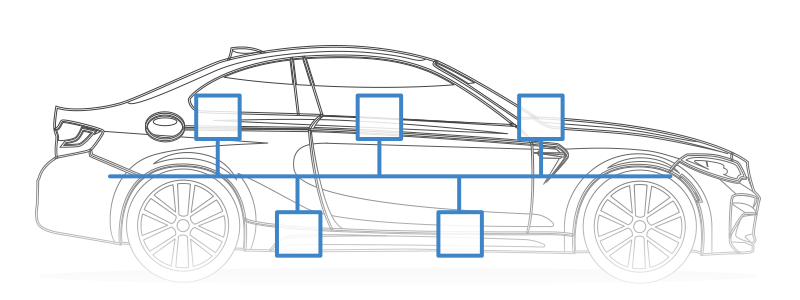
In plow, 'nodes' or 'electronic control units' (ECUs) are similar parts of the body, interconnected via the Tin can charabanc. Data sensed by one office can be shared with another.
And so what is an ECU?
In an automotive Can bus organisation, ECUs can e.g. be the engine command unit, airbags, sound system etc. A modern car may have up to 70 ECUs - and each of them may have data that needs to be shared with other parts of the network.

This is where the Tin standard comes in handy:
The CAN bus arrangement enables each ECU to communicate with all other ECUs - without complex dedicated wiring.
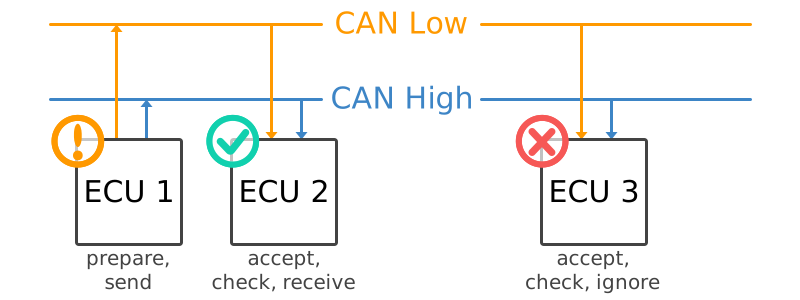
Specifically, an ECU tin can prepare and broadcast information (e.yard. sensor data) via the Can bus (consisting of ii wires, CAN low and Tin can loftier). The broadcasted information is accustomed by all other ECUs on the CAN network - and each ECU can then bank check the data and decide whether to receive or ignore it.
In more than technical terms, the controller area network is described by a information link layer and physical layer. In the instance of high speed CAN, ISO 11898-one describes the data link layer, while ISO 11898-2 describes the concrete layer. The function of CAN is often presented in the 7 layer OSI model as per the illustration.
The Tin coach physical layer defines things like cable types, electrical signal levels, node requirements, cable impedance etc. For example, ISO 11898-two dictates a number of things, including below:
- Baud charge per unit: CAN nodes must be connected via a two wire autobus with baud rates upwardly to 1 Mbit/southward (Classical CAN) or 5 Mbit/s (Tin FD)
- Cable length: Maximal CAN cablevision lengths should exist between 500 meters (125 kbit/s) and 40 meters (1 Mbit/s)
- Termination: The Tin can charabanc must exist properly terminated using a 120 Ohms CAN bus termination resistor at each terminate of the bus

In the context of automotive vehicle networks, you'll often run into a number of unlike types of network types. Below we provide a very brief outline:
- Loftier speed Tin bus: The focus of this article is on high speed Tin passenger vehicle (ISO 11898). It is by far the virtually popular Tin standard for the concrete layer, supporting bit rates from 40 kbit/s to 1 Mbit/s (Classical Can). It provides simple cabling and is used in practically all automotive applications today. Information technology also serves equally the basis for several higher layer protocols such every bit OBD2, J1939, NMEA 2000, CANopen etc. The second generation of CAN is referred to every bit CAN FD (Tin can with Flexible Information-charge per unit)
- Low speed CAN bus: This standard enables bit rates from twoscore kbit/s to 125 kbit/s and allows the CAN bus commmunication to continue fifty-fifty if at that place is a fault on one of the two wires - hence it is also referred to as 'fault tolerant Can'. In this organisation, each CAN node has it's ain CAN termination
- LIN bus: LIN double-decker is a lower cost supplement to Can passenger vehicle networks, with less harness and cheaper nodes. LIN autobus clusters typically consist of a LIN master acting as gateway and up to xvi slave nodes. Typical employ cases include e.g. not-critical vehicle functions like aircondition, door functionality etc. - for details see our LIN bus intro or LIN bus data logger commodity
- Automotive ethernet: This is increasingly being rolled out in the automotive sector to support the high bandwidth requirements of ADAS (Avant-garde Driver Assistance Systems), infotainment systems, cameras etc. Automotive ethernet offers much higher information transfer rates vs. Can coach, merely lacks some of the safe/performance features of Classical Can and Tin can FD. Well-nigh likely, the coming years will encounter both automotive ethernet, CAN FD and Can Xl being used in new automotive and industrial development
Top four benefits of CAN omnibus
The Can bus standard is used in practically all vehicles and many machines due to below primal benefits:
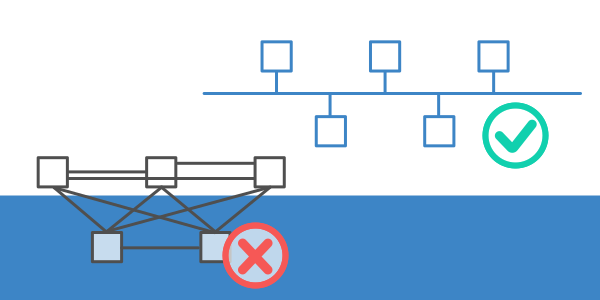
Simple & depression cost
ECUs communicate via a single Tin can system instead of via straight complex analogue signal lines - reducing errors, weight, wiring and costs
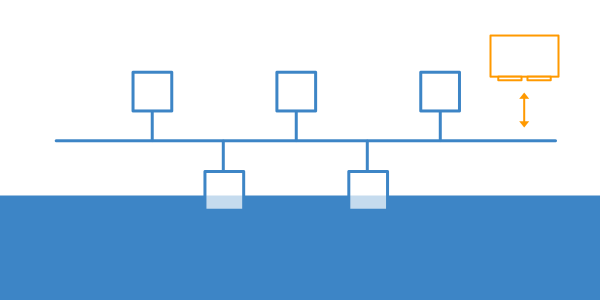
Fully centralized
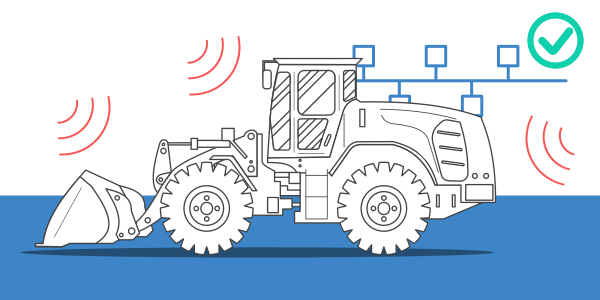
The Tin can charabanc provides 'one point-of-entry' to communicate with all network ECUs - enabling central diagnostics, data logging and configuration
Extremely robust
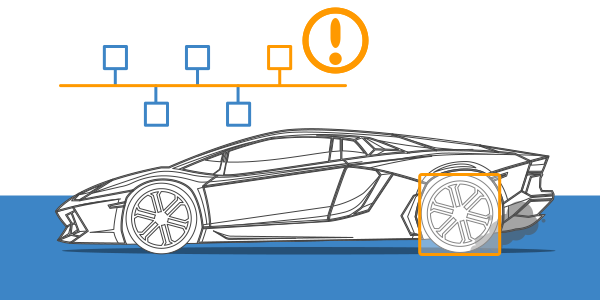
The organisation is robust towards electric disturbances and electromagnetic interference - ideal for safety critical applications (e.one thousand. vehicles)
Efficient
CAN frames are prioritized by ID so that meridian priority information gets firsthand motorbus access, without causing interruption of other frames
The Tin can bus history in short
- Pre Tin can: Car ECUs relied on complex point-to-bespeak wiring
- 1986: Bosch developed the Tin can protocol every bit a solution
- 1991: Bosch published Can 2.0 (CAN 2.0A: 11 bit, 2.0B: 29 bit)
- 1993: CAN is adopted every bit international standard (ISO 11898)
- 2003: ISO 11898 becomes a standard series
- 2012: Bosch released the CAN FD one.0 (flexible data rate)
- 2015: The CAN FD protocol is standardized (ISO 11898-i)
- 2016: The concrete Tin can layer for information-rates upward to 5 Mbit/s standardized in ISO 11898-ii
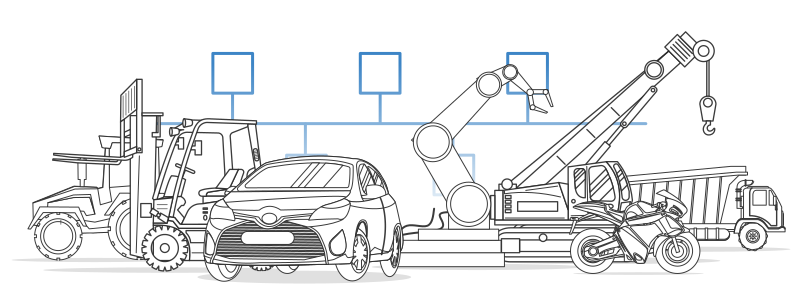
Today, Can is standard in automotives (cars, trucks, buses, tractors, ...), ships, planes, EV batteries, machinery and more than.

The future of CAN jitney
Looking ahead, the CAN bus protocol volition stay relevant - though information technology volition exist impacted by major trends:
- A need for increasingly advanced vehicle functionality
- The rising of cloud computing
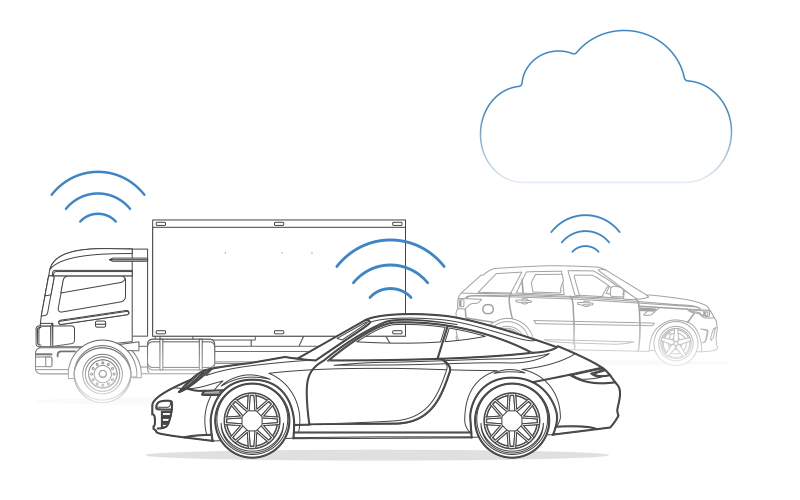
- Growth in Internet of Things (IoT) and continued vehicles
- The impact of democratic vehicles
In particular, the rise in connected vehicles (V2X) and cloud will lead to a rapid growth in vehicle telematics and IoT CAN loggers.
In turn, bringing the Tin bus network 'online' also exposes vehicles to security risks - and may require a shift to new CAN protocols like CAN FD.
As vehicle functionality expands, so does the load on the CANbus. To back up this, CAN FD (Flexible Information Rate) has been designed as the 'next generation' Tin can bus.
Specifically, CAN FD offers three benefits (vs Classical Tin can):
- It enables data rates up to eight Mbit/south (vs 1 Mbit/south)
- Information technology allows data payloads of up to 64 bytes (vs viii bytes)
- It enables improved security via authentication
In curt, CAN FD boosts speed and efficiency - and it is therefore being rolled out in newer vehicles. This will also drive an increasing need for IoT Tin can FD data loggers.
"The kickoff cars using Tin FD will appear in 2019/2020 and Tin can FD volition replace stride-past-step Classical CAN"
- Tin in Automation (CiA), "CAN 2020: The Future of CAN Applied science"
Acquire more
What is a Tin can frame?
Communication over the CAN bus is washed via CAN frames.
Below is a standard CAN frame with 11 bits identifier (CAN 2.0A), which is the blazon used in nigh cars. The extended 29-bit identifier frame (CAN 2.0B) is identical except the longer ID. It is eastward.g. used in the J1939 protocol for heavy-duty vehicles.
Note that the Tin ID and Data are highlighted - these are of import when recording Tin bus data, every bit we'll see below.
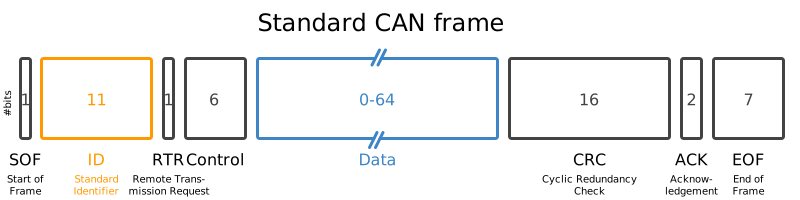
- SOF: The Get-go of Frame is a 'dominant 0' to tell the other nodes that a Tin node intends to talk
- ID: The ID is the frame identifier - lower values have higher priority
- RTR: The Remote Manual Request indicates whether a node sends data or requests dedicated data from another node
- Control: The Command contains the Identifier Extension Chip (IDE) which is a 'dominant 0' for 11-bit. It as well contains the 4 bit Data Length Code (DLC) that specifies the length of the data bytes to exist transmitted (0 to 8 bytes)
- Data: The Data contains the information bytes aka payload, which includes Tin can signals that can be extracted and decoded for information
- CRC: The Cyclic Redundancy Check is used to ensure information integrity
- ACK: The ACK slot indicates if the node has acknowledged and received the data correctly
- EOF: The EOF marks the end of the Tin can frame
Logging CAN data - example use cases
There are several mutual utilise cases for recording Tin bus data frames:
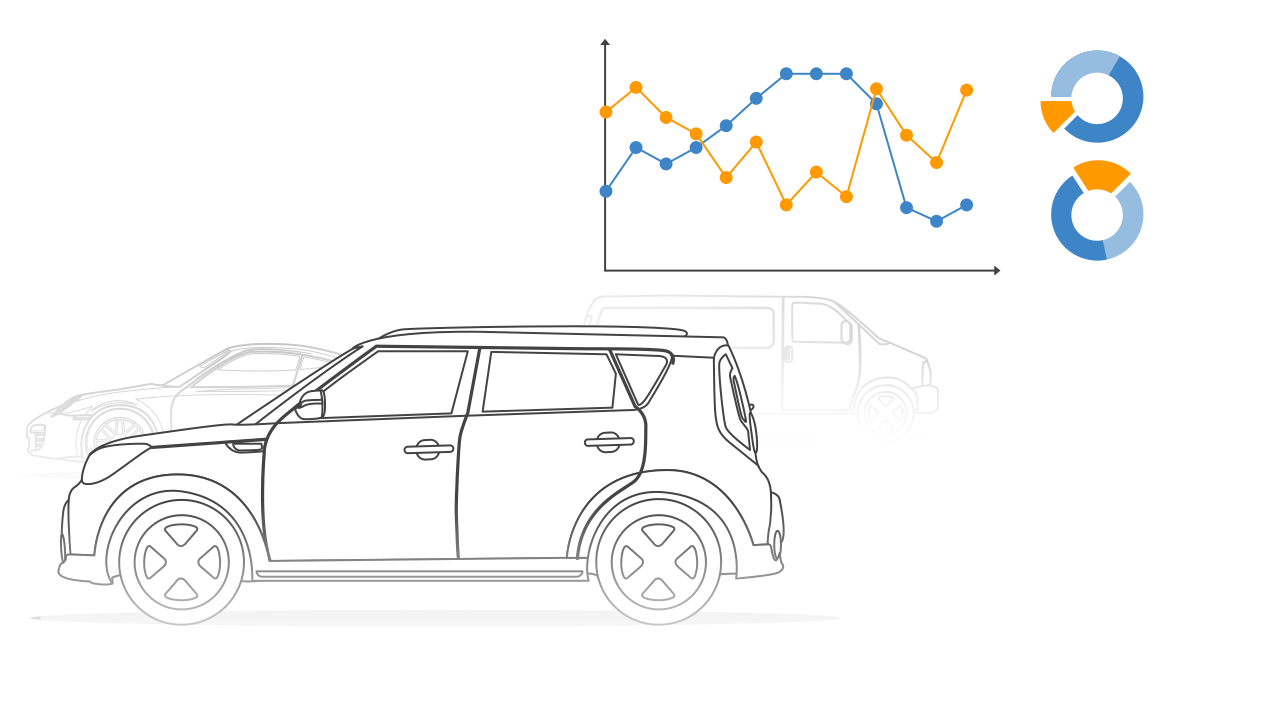
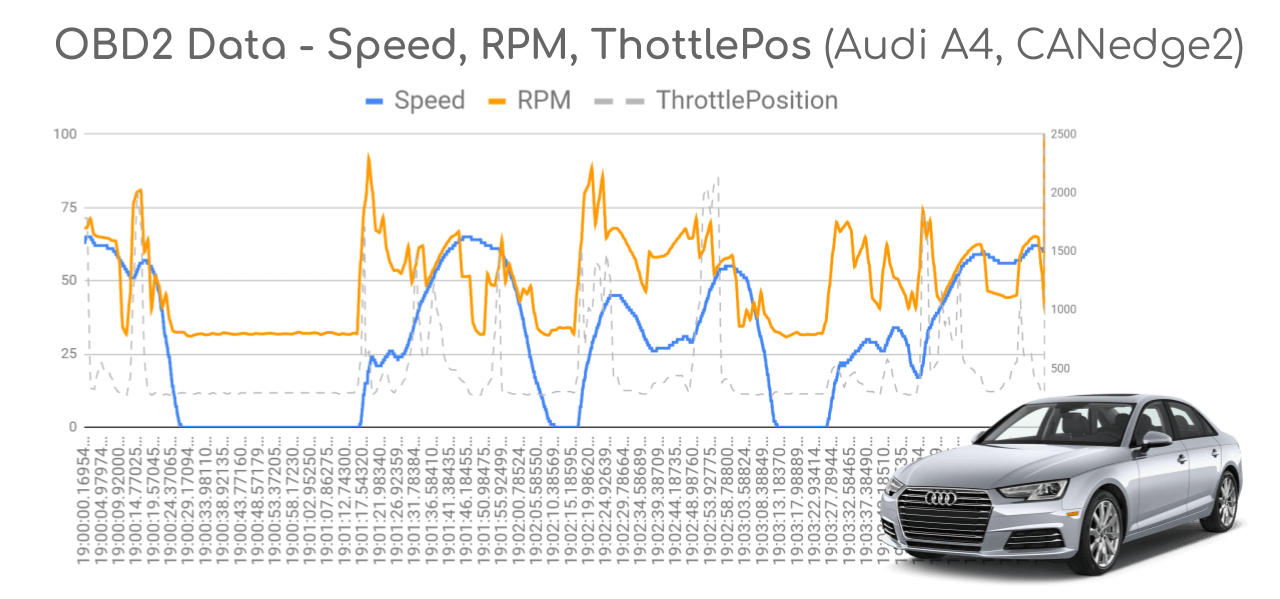
Logging/streaming data from cars
OBD2 data from cars can e.g. exist used to reduce fuel costs, ameliorate driving, test prototype parts and insurance
Learn more
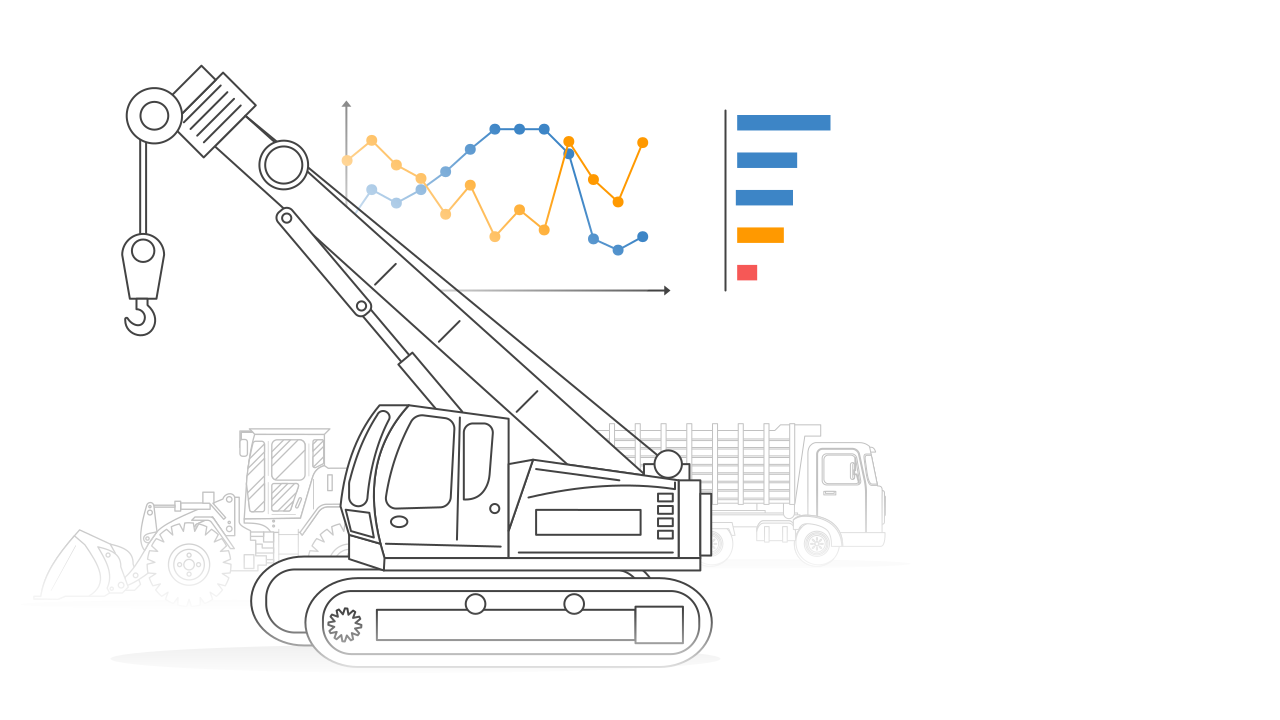
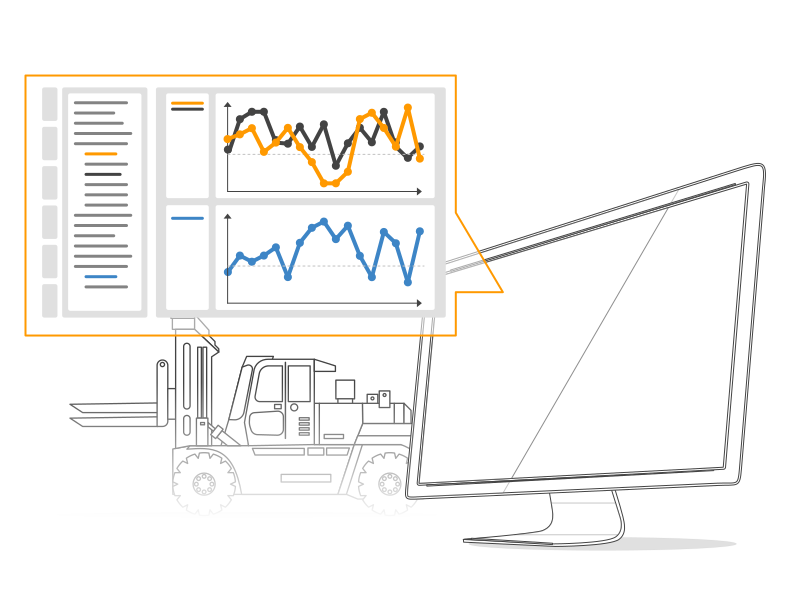
Heavy duty fleet telematics
J1939 data from trucks, buses, tractors etc. can be used in fleet management to reduce costs or improve safety
Learn more
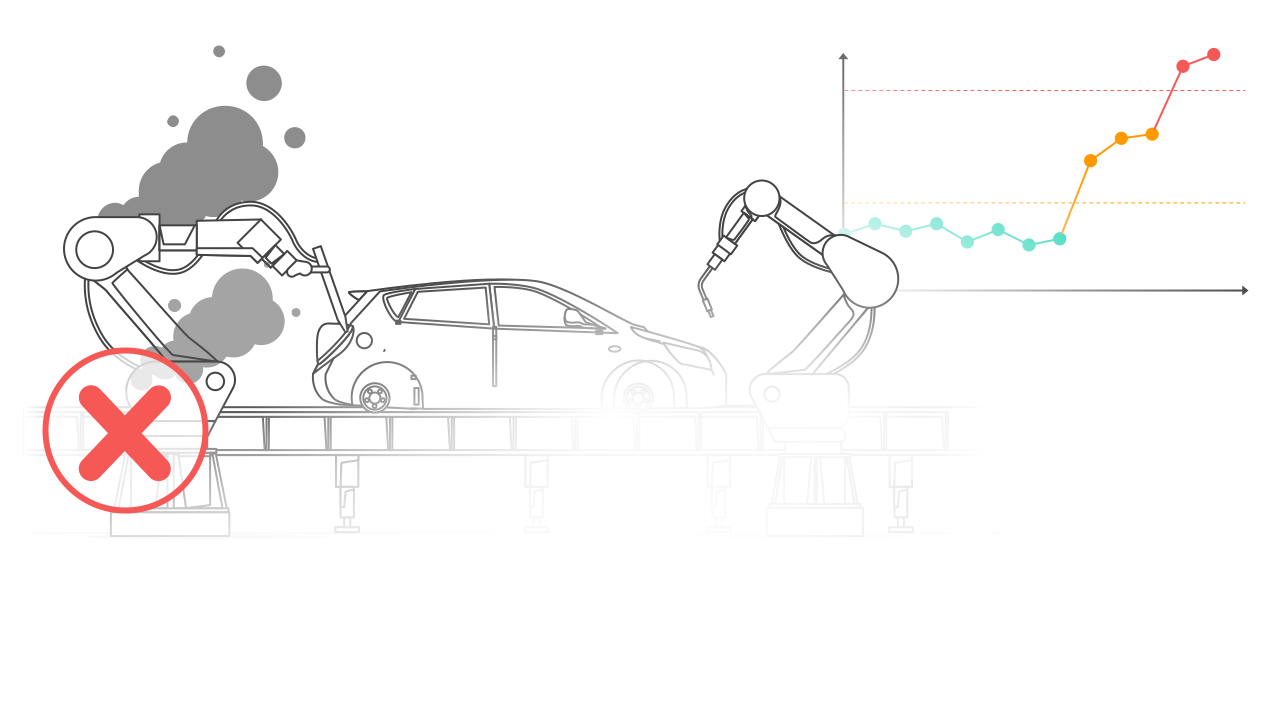
Predictive maintenance
Vehicles and machinery can be monitored via IoT Tin loggers in the cloud to predict and avoid breakdowns
Acquire more than
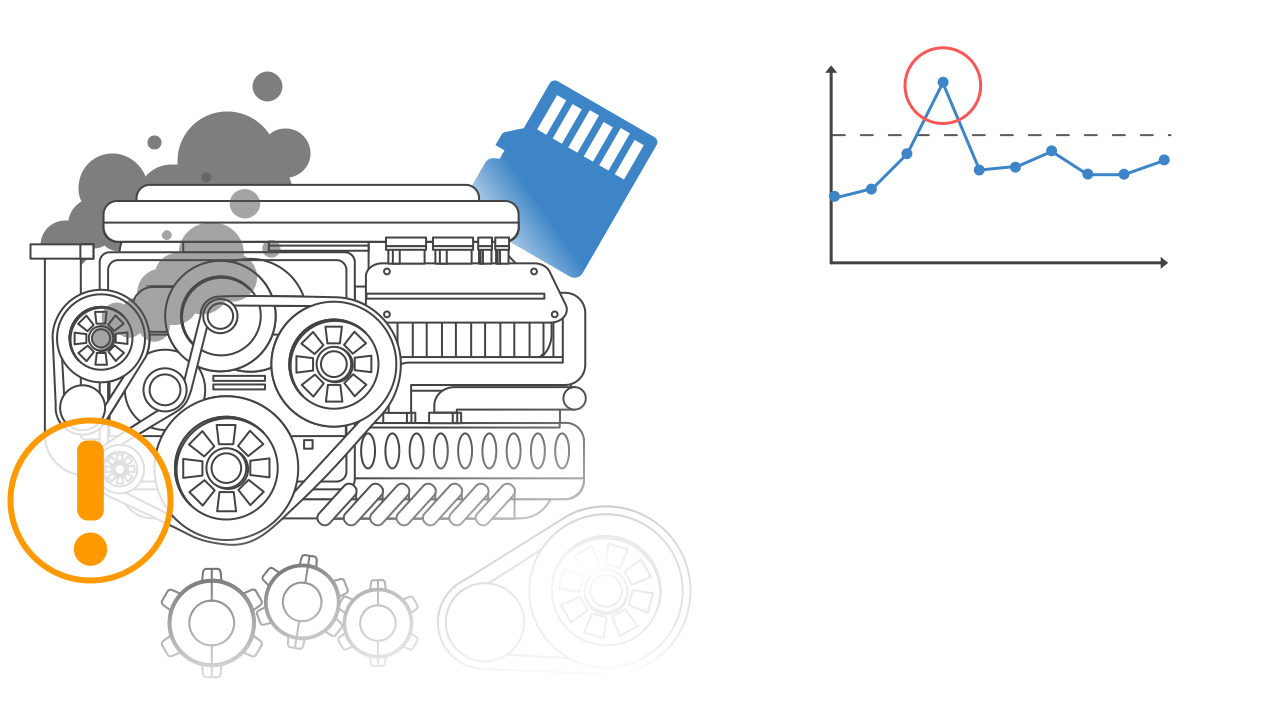
Vehicle/machine blackbox
A Tin logger can serve equally a 'blackbox' for vehicles or equipment, providing data for e.yard. disputes or diagnostics
Learn more
Do you have a CAN logging use case? Reach out for costless sparring!
Contact us
How to log CAN motorbus data
As mentioned, two Can fields are important for Can logging:
The CAN ID and the Data.
To record CAN data y'all need a Can logger. This lets you log timestamped CAN data to an SD card. In some cases, you demand a CAN interface to stream information to a PC - e.g. for machine hacking.
This commencement step is to connect your CAN logger to your CAN charabanc. Typically this involves using an adapter cable:
- Cars: In most cars, you merely use an OBD2 adapter to connect. In most cars, this will allow you log raw Tin can data, as well equally perform requests to log OBD2 or UDS (Unified Diagnostic Services) data
- Heavy duty vehicles: To log J1939 data from trucks, excavators, tractors etc you can typically connect to the J1939 Can motorcoach via a standard J1939 connector cable (deutsch 9-pivot)
- Maritime: Most ships/boats employ the NMEA 2000 protocol and enable connexion via an M12 adapter to log marine data
- CANopen: For CANopen logging, you can often directly use the CiA 303-ane DB9 connector (i.e. the default connector for our CAN loggers), optionally with a CAN passenger vehicle extension cable
- Contactless: If no connector is bachelor, a typical solution is to use a contactless CAN reader - e.yard. the CANCrocodile. This lets y'all log data directly from the raw CAN twisted wiring harness, without direct connection to the Tin can bus (often useful for warranty purposes)
- Other: In practice, countless other connectors are used and often y'all'll need to create a custom CAN bus adapter - here a generic open-wire adapter is useful
When you've identified the right connector and verified the pin-out, you tin connect your CAN logger to outset recording information. For the CANedge/CLX000, the Tin baud charge per unit is motorcar-detected and the device will commencement logging raw Can data immediately.
You tin optionally download raw OBD2 and J1939 samples from the CANedge2 in our intro docs. You tin east.g. load this data in the free CAN bus decoder software tools.
Data from the CANedge is recorded in the popular binary format, MF4, merely can be converted to whatever file format via our simple MF4 converters (eastward.k. to CSV, ASC, TRC, ...).
Beneath is a CSV instance of raw CAN frames logged from a heavy-duty truck using the J1939 protocol. Observe that the CAN IDs and information bytes are in hexadecimal format:
Example: CANedge CAN logger
The CANedge1 lets you easily tape data from any CAN autobus to an eight-32 GB SD card. Merely connect information technology to e.thou. a car or truck to offset logging - and decode the data via gratuitous software/APIs.
Further, the CANedge2 adds WiFi, letting yous machine-transfer data to your own server - and update devices over-the-air.
learn more
How to decode raw Tin data to 'physical values'
If you review the raw CAN bus data sample above, you will probably notice something:
Raw CAN motorcoach information is not human-readable.
To interpret it, you lot need to decode the CAN frames into scaled engineering values aka concrete values (km/h, degC, ...).
Below we show footstep-past-step how this works:
Each CAN frame on the jitney contains a number of CAN signals (parameters) within the Tin databytes. For example, a Tin frame with a specific CAN ID may deport data for e.g. two Tin signals.
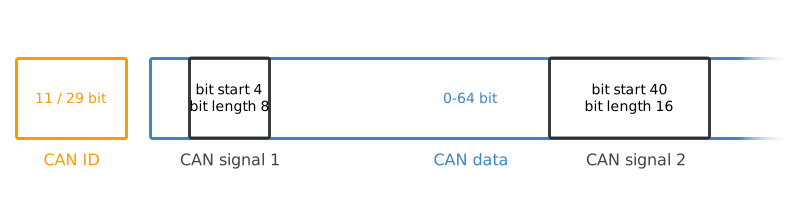
To extract the physical value of a Can signal, the following information is required:
- Chip outset: Which bit the bespeak starts at
- Bit length: The length of the signal in bits
- Showtime: Value to kickoff the signal value by
- Calibration: Value to multiply the signal value by
To extract a Tin signal, you 'carve out' the relevant bits, have the decimal value and perform a linear scaling:
physical_value = kickoff + scale * raw_value_decimal
Virtually oftentimes, the Tin can double-decker "decoding rules" are proprietary and non hands bachelor (except to the OEM, i.e. Original Equipment Manufacturer). There are a number of solutions to this when you're non the OEM:
- Record J1939 information: If you're logging raw data from heavy duty vehicles (trucks, tractors, ...), you're typically recording J1939 data. This is standardized across brands - and you tin can use our J1939 DBC file to decode data. See as well our J1939 data logger intro
- Record OBD2/UDS information: If yous need to log data from cars, you can typically asking OBD2/UDS information, which is a standardized protocol across cars. For details see our OBD2 data logger intro and our free OBD2 DBC file
- Apply public DBC files: For cars, online databases be where others have opposite engineered proprietary some of the CAN data. Nosotros go on a listing of such databases in our DBC file intro
- Reverse engineer data: You can also attempt to reverse engineer data yourself by using a Tin can bus sniffer, though it tin be fourth dimension consuming and difficult
- Use sensor modules: In some cases you may need sensor data that is not bachelor on the Tin can autobus (or which is hard to reverse engineer). Here, sensor-to-Tin can modules similar the CANmod series can be used. You tin integrate such modules with your CAN bus, or apply them as add-ons for your CAN logger to add information such as GNSS/IMU or temperature data
- Partner with the OEM: In some cases the OEM will provide decoding rules as function of the Tin bus arrangement technical specs. In other cases you may be able to get the information through e.1000. a partnership
In some cases, conversion rules are standard across manufacturers - e.g. in the J1939 protocol for heavy-duty.
This means that you can employ the J1939 parameter conversion rules on practically any heavy-duty vehicle to convert a big share of your information. To brand this practical, you need a format for storing the conversion rules. Here, the CAN database (DBC) format is the manufacture standard - and is supported by most Can charabanc decoder software incl. the supporting tools for our CAN loggers, asammdf and CANvas.
Nosotros too offer a low cost J1939 DBC file, which yous can purchase as a digital download. With this, you tin get quickly from raw J1939 data to human-readable form.
Larn more
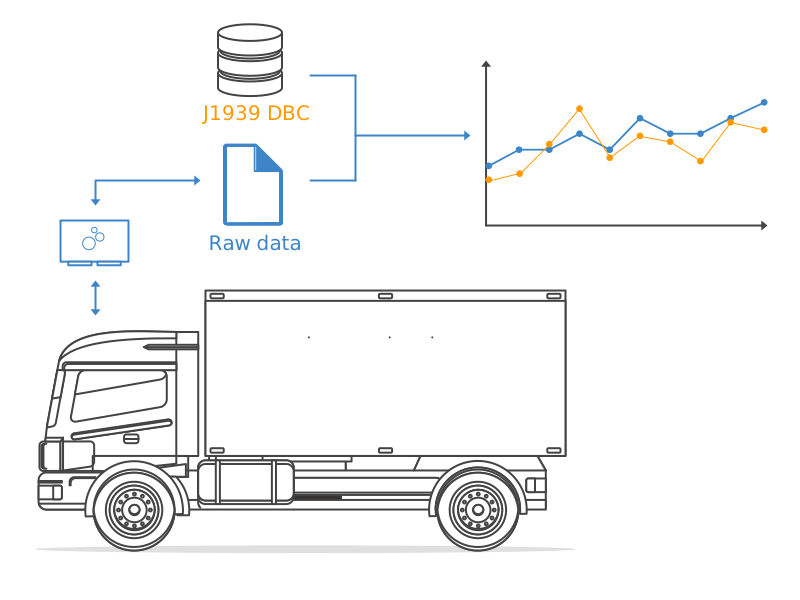
To illustrate how you lot can excerpt CAN signals from raw CAN data frames, we include below the previous J1939 sample information - but now decoded via a J1939 DBC file using the asammdf GUI tool.
Every bit evident, the issue is timeseries data with parameters like oil temperature, engine speed, GPS, fuel charge per unit and speed:
For more on logging J1939 data, see our J1939 information logger and mining telematics articles. You lot tin too acquire how to analyze/visualize your CAN information via the gratis asammdf GUI tool or telematics dashboards.
What is the link betwixt CAN, J1939, OBD2, CANopen, ...?
The Controller Area Network provides the footing for communication - just not a lot more.
For example, the CAN standard does not specify how to handle messages larger than 8 bytes - or how to decode the raw data. Therefore a set of standardized protocols be to further specify how information is communicated between CAN nodes of a given network.
Some of the most common standards include SAE J1939, OBD2 and CANopen. Further, these college-layer protocols will increasingly be based on the 'next generation' of CAN, Tin FD (due east.g. CANopen FD and J1939-17/22).

SAE J1939
J1939 is the standard in-vehicle network for heavy-duty vehicles (east.k. trucks & buses). J1939 parameters (e.g. RPM, speed, ...) are identified by a suspect parameter number (SPN), which are grouped in parameter groups identified by a PG number (PGN).
J1939 intro
J1939 telematics
OBD2
On-lath diagnostics (OBD, ISO 15765) is a self-diagnostic and reporting capability that eastward.g. mechanics employ to identify car issues. OBD2 specifies diagnostic trouble codes (DTCs) and existent-fourth dimension data (eastward.g. speed, RPM), which tin can be recorded via OBD2 loggers.
OBD2 intro
OBD2 logging

CANopen
CANopen is used widely in embedded control applications, incl. due east.chiliad. industrial automation. It is based on Tin can, meaning that a Can motorbus data logger is also able to log CANopen data. This is key in e.one thousand. machine diagnostics or optimizing production.
CANopen intro
CANopen logger
Tin can FD
CAN motorcoach with flexible data-rate (Can FD) is an extension of the Classical Can data link layer. It increases the payload from eight to 64 bytes and allows for a higher data flake rate, dependent on the Tin transceiver. This enables increasingly data-intensive use cases like EVs.
Tin FD intro
CAN FD logger
For more on Tin passenger vehicle get to our guides section or join our newsletter.
Need to log/stream CAN motorbus data?
Get your Tin can logger today!
Recommended for y'all
Source: https://www.csselectronics.com/pages/can-bus-simple-intro-tutorial
0 Response to "Can a B&g Hot Water Circulating Pump Run Backwards"
Enviar um comentário